
Top tips: working with under 18's as a Mountain Leader or Rock Climbing Instructor
As part of your training for Mountain Training’s Mountain Leader and/or Rock Climbing Instructor scheme training it is likely we have discussed the legalities of working with young people. This is often a question on assessment home papers and oft asked for blog post topic so here you go!
N.B. please take this as general information; for specific situations please refer to official sources such as the Health and Safety Executive, ADVENTURE RMS or seek legal advice from a qualified professional who can advise on your individual circumstances.
Myth 1: it is a legal requirement to be qualified to work in the mountains
Well yes and no, there is no legal requirements or regulations to work with adults (you don’t need to be qualified or insured!) but working with young people is different. Young people do require organisations to be licenced (or exempt) and use competent people. There are 4 routes to competence; hold an appropriate qualification, hold an equivalent qualification (ie from another country), be competent through experience (more likely to be used in activities where no qualification exists ie gorge scrambling) or hold a site specific sign off.
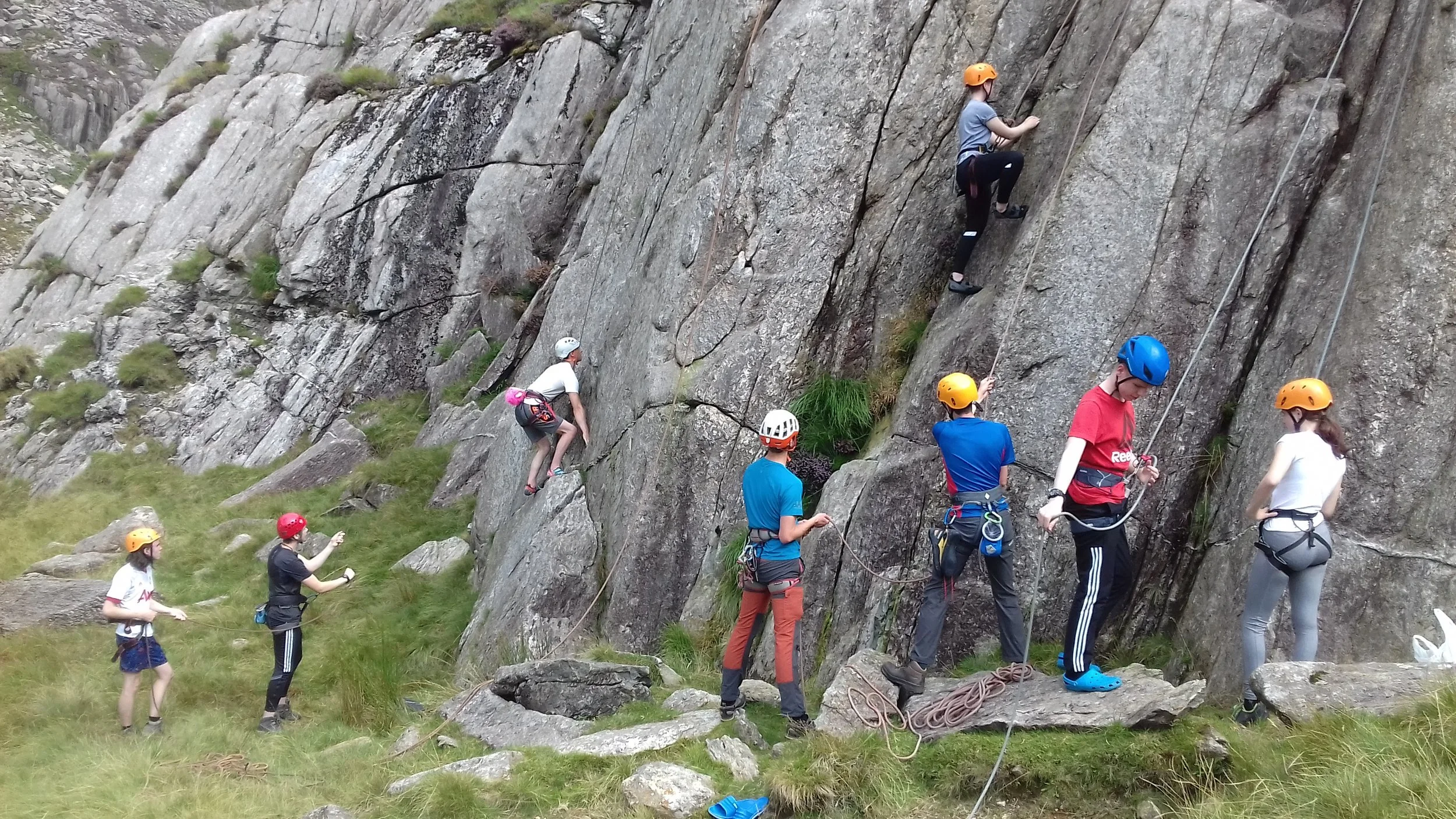
Typical single pitch rock climbing session
Myth 2: you always need a license to work with young people in the outdoors
If you are working commercially you likely need a license (or you are working for a provider who holds the license).
There are 3 general exemptions I will go into more détail on, which help when deciding whether you require a license for working with under 18’s in the mountains (AALA lists 10 here https://www.hse.gov.uk/aala/general-information.htm).
1. If you are volunteering. The license covers commercial activities so if you are out with a scout group and are a volunteer leader, you probably don’t need a license (but the Scout Association have their own requirements for example). If you were getting paid for working with that Scout group you would.
2. Schools providing activities for their own pupils. (This might include freelancers if you are a proper employee of the school, are working within their risk assessments, management structure, they set the days and times with their kit and going to their choice of venues etc.)
3. Family activity days where the parents are present and able to stop activity at any time. For this reason single pitch climbing may be workable but multipitch climbing might not.
History: Unfortunately there have been a number of high profile fatalities and incidents involving young people in the mountains. It is 50 years since one of the most awful tragedies; the Cairngorm disaster. Two groups from an outdoor centre were planning a two day trip into a remote bothy. During the later part of day one, the weather became very poor with blizzard conditions and snow. The first group successfully reached the bothy but the second were caught out in the storm. The first group wrongly assumed that the second had turned back and as the centre thought both groups were staying out no alarm was raised. This was in days before mobile phones or satellite trackers were available. Unfortunately the group caught in the open suffered badly from exposure to the storm and sadly many did not survive.
The second major incident occurred at the other end of the UK. In 1994 a group from a centre in Dorset ventured out sea kayaking in wild conditions. The centres usual leaders were unavailable so the group went out with inexperienced and unqualified adults and again sadly several perished. This is infamously known as the Lyme Bay disaster.
The result of these incidents (and others) was an act of parliament, the Activity Centres (Young Person’s Safety) Act 1995, which read in conjunction with the Adventure Activities Licensing Regulations document from 2004 is the ultimate source of guidance relating to the application of the act.
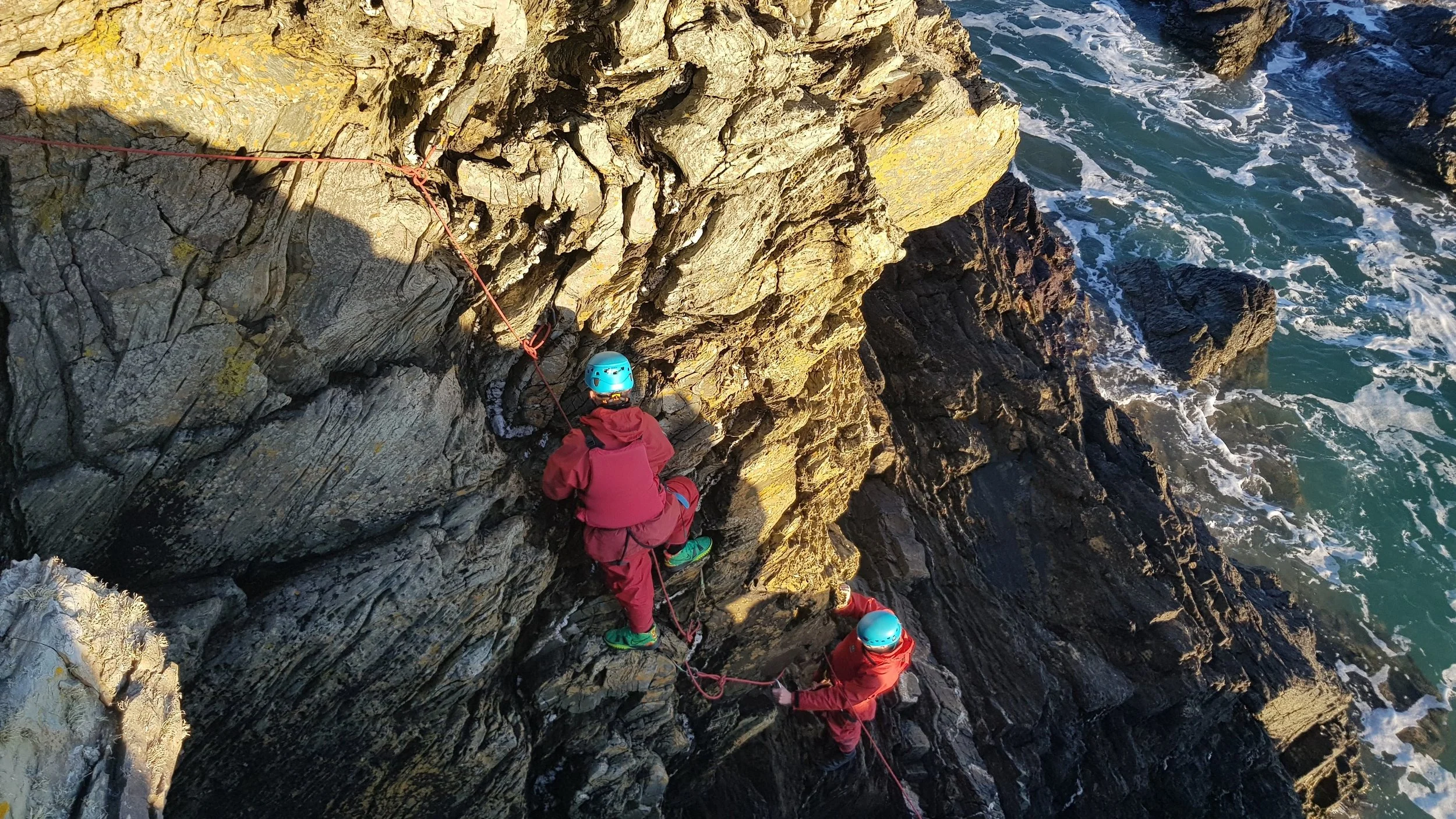
Sea Level Traversing is often one of the most challenging but rewarding activities I do with young people
The process: if you decide you need a license, the process may make you think again. It is a fairly lengthy application, with a hefty fee. You then get inspected and the report produced is used by the Health and Safety Executive to decide on the type and length of your license. Big organisations with high (often seasonal) staff turn over will likely get a 1 year license whereas an established one man band style provider who only provides hillwalking is more likely to get a 3 year license. Ultimately most people who don’t hold a license will pass work over to providers who do.
Other useful facts:
Volenti Non Fit Injuria = is the Latin for “to a willing person, it is not a wrong.” This legal maxim holds that a person who knowingly and voluntarily risks danger cannot try to sue for any resulting injury. This is less appropriate to under 18’s because they are deemed to less responsible for their own actions.
Loco Parentis = this is the Latin term meaning "in [the] place of a parent" or "instead of a parent." This refers to the legal responsibility of persons or organisation to perform some of the functions or responsibilities of a parent. Teachers or instructors would fall in to this category when the parents aren’t present
Indoor climbing is not a licensable activity, probably because climbing walls didn’t really exist in any number in 1995!
Summary
There have been consultations for a few years on whether licensing is still required or whether it could be replaced by an industry code of practise (which would be legal enforceable if you had an accident and weren’t compilate) however as the outdoor sector is seen as a very safe industry, I have doubts whether there will be any political will to edit or remove licensing.
Simon Verspeak is an experienced outdoor education practitioner, working with young people in residential multi activity provision since 2003.
Orange Mountaineering holds an AALA license to work with young people in the mountains, on the water and underground.